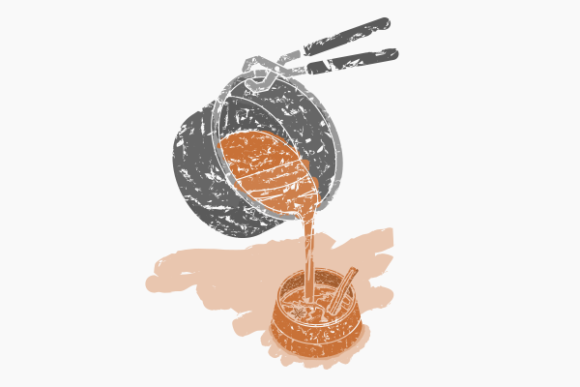
Brush Strokes Pouring Masala Chai to Cup
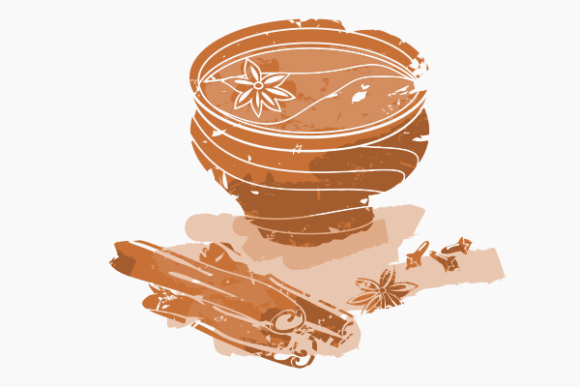
When I first opened Brush Strokes Pouring Masala Chai to Cup, I immediately felt the warmth of the scene. The three-quarter top view captures a moment that feels both intimate and culturally rich. A stream of deep amber chai arcs from the lip of a traditional pan into a textured pottery cup, all rendered in loose, expressive brush strokes. There is nothing stiff or overly polished about this illustration. That is precisely what makes it interesting for an embroidery project. The painterly quality suggests movement, steam, and the comfort of a slow afternoon. If you are an embroidery designer, a craft business owner, or an Etsy seller looking for a design that tells a story, this one holds real promise.
I have spent years testing artwork for stitch conversion, and my first instinct with this piece was to imagine it on a kitchen towel hanging near a stove, on a canvas tote bag carried to a farmers market, or stitched onto a soft sweatshirt for someone who loves South Asian tea culture. The mood is gentle, nostalgic, and handcrafted. It does not scream for attention. Instead, it invites someone to lean in and appreciate the details. That kind of visual personality is rare in the Illustrations category, where many files lean heavily on clean vector lines and flat color blocks. The brush stroke style gives this design a handmade soul, which aligns beautifully with embroidery as a medium.
What the Brush Stroke Style Really Means for Stitching
The loose, painterly strokes in Brush Strokes Pouring Masala Chai to Cup create a distinct texture. In a digital file, that texture looks effortless. But when you start thinking about converting an Illustrations piece like this into a machine embroidery design, you have to ask yourself how those irregular edges and varied opacities will translate into thread. This is not a flat silhouette with solid outlines. It is a graphic with soft transitions, layered washes, and strokes that feather at the edges. If you are digitizing this yourself, expect to spend time simplifying overlapping elements and deciding which brush marks become satin stitches, which become fill stitches, and which might need to be dropped entirely to keep the stitch count manageable.
For those who prefer applique or a mixed approach, the chai stream and the rim of the pottery cup could be interpreted as clean satin stitch paths, while the darker tea tones inside the pan might work better as a light fill with strategic color blending. I would strongly recommend testing a small section of the design on scrap fabric before committing to a full run. The transitions between the tea pour, the pan, and the cup need to read clearly once thread replaces pixels. On a positive note, the brush stroke aesthetic forgives slight imperfections in stitching. If a satin stitch edge is not perfectly smooth, it can actually enhance the handmade feel rather than detract from it.
A Real Project Scenario: Kitchen Linen Collection
Let me walk you through a practical scenario. I recently worked with a small shop owner who wanted a set of embroidered tea towels for a Diwali gift collection. She needed designs that felt celebratory but not overly festive, pieces that her customers could use year-round. I thought of Brush Strokes Pouring Masala Chai to Cup immediately. The top-down perspective sits beautifully on a rectangular towel, and the earthy tones of chai, clay, and subtle brushwork complement natural linen fabric. We tested the design on a medium-weight cotton towel with a cutaway stabilizer, and the result was striking. The tea stream became the focal point, drawing the eye diagonally across the towel. The pottery cup grounded the composition, and the brush strokes around the pan added movement without overwhelming the embroidery area.
Her customers responded with genuine warmth. Several mentioned that the design reminded them of their grandmothers making chai in the morning. That emotional connection is something you cannot manufacture with a generic floral or geometric pattern. When you choose a graphic like this for your Graphics library, you are not just buying an image. You are buying a feeling that transfers directly into your finished product. For craft business owners, that emotional hook is what turns a casual browser into a repeat buyer.
Where This Design Shines Brightest
After studying the layout and the natural focal points of Brush Strokes Pouring Masala Chai to Cup, I can confidently say it belongs on flat or gently curved surfaces. Tote bags, pillow covers, aprons, and tea towels are ideal. The design has a slightly organic, asymmetrical shape, which means it does not need to be perfectly centered to look intentional. In fact, placing it slightly off-center on a tote bag or a sweatshirt chest area can create a more editorial, modern look. For apparel decorators, this works well on the upper back of a denim jacket or the front pocket area of a relaxed-fit t-shirt.
Baby embroidery is another unexpected but fitting application. A soft receiving blanket with a subtle, tone-on-thread version of the chai pour could be a beautiful gift for a family with South Asian heritage. The brush strokes can be thinned out and stitched in a single color to keep the design gentle against delicate baby fabrics. Nursery decor, especially in homes that celebrate cultural traditions, would welcome this kind of imagery.
For Etsy sellers and digital product sellers, this design also works as a printable mockup element. If you create embroidery previews, branding assets, or product photography overlays, the editable SVG vector format lets you adjust colors, scale, and layering. You can show potential buyers exactly how the design would look on different fabric backgrounds before they purchase the embroidery file. That kind of versatility adds value to your shop and builds customer trust.
When to Pause and Rethink Fabric Choices
Not every project is the right home for a design with this much visual texture. I would be cautious about using Brush Strokes Pouring Masala Chai to Cup on highly textured fabrics like thick terry cloth or heavily napped fleece. The brush stroke details that make the design special could get lost in the fabric pile. Similarly, stretchy fabrics like performance wear or thin jersey need careful hooping and a sturdy stabilizer, or the stitching may pucker and distort the tea stream. If you must stitch on a cap, keep the design small and place it on the front panel where the fabric is reinforced. The curved surface of a cap brim or side panel will challenge the organic flow of the pour, and you risk losing the visual rhythm.
Dark fabrics also require attention. The chai tones, which likely include warm browns, ochres, and cream highlights, can lose contrast on black or charcoal backgrounds. I recommend doing a black-and-white mockup before committing to thread colors. Invert the design and see if the shapes still hold together. If the tea stream disappears into the background, you may need to add a subtle outline or adjust the thread palette. Small hoop sizes are another consideration. The design needs enough space for the brush strokes to breathe. Cramming it into a four-inch hoop could force you to simplify the artwork to the point of losing its character. Check the actual dimensions of the editable SVG vector before you assume it will fit your machine's embroidery field.
Stitch Density and Thread Color Decisions
One of the first things I ask myself when evaluating an Illustrations piece for embroidery is whether the stitch density will feel appropriate for the subject. With Brush Strokes Pouring Masala Chai to Cup, the answer depends on how faithfully you want to replicate the original brush marks. If you digitize every stroke, you could end up with a dense, heavy design that stiffens the fabric. A smarter approach is to select key brush strokes that define the motion and mood, and let the fabric show through in the gaps. This keeps the embroidery breathable and comfortable, especially on wearables.
Thread color selection should lean into the warmth of the scene. Think about spiced browns, clay reds, muted ochres, and soft cream for the pottery cup. If you want to introduce a subtle contrast, a single accent color like a deep teal or a dusty sage on the cup rim or the pan handle can add a contemporary twist without breaking the traditional feel. Test your thread choices under natural and artificial light, because the way chai tones shift in different lighting can affect how authentic the finished product looks.
Commercial Use and Practical Licensing Notes
For craft business owners and Etsy sellers, the commercial viability of Brush Strokes Pouring Masala Chai to Cup is a genuine consideration. The editable SVG vector format means you can adapt the design for multiple product lines, which is a major advantage if you sell handmade items across different categories. You could use the same core graphic on a tea towel, a greeting card, a tote bag, and a digital mockup listing, creating a cohesive brand identity. Before you list finished products, confirm the licensing terms that come with the file. The product description mentions it can be used as artwork elements of beverage with South Asian themes, but you should verify whether commercial use for physical products, digital product previews, or resale as part of a design bundle is allowed. Do not assume. Check the license, and if anything is unclear, reach out to the creator.
The Emotional Currency of a Chai Design
There is something quietly powerful about a design that centers on a ritual as universal and personal as pouring chai. Brush Strokes Pouring Masala Chai to Cup does not just depict a beverage. It captures a pause, a moment of care, a connection to home. When you stitch this onto a product, you are offering your customer more than decoration. You are offering a memory or a feeling of belonging. That emotional currency translates into higher perceived value, stronger giftability, and better customer engagement. A tote bag with this design is not just a bag. It is a conversation starter. A sweatshirt with this embroidery is not just clothing. It is a statement of identity and taste.
For small shop owners, this kind of design can also help differentiate your product line in a crowded market. Many handmade shops rely on generic floral, animal, or seasonal motifs. A brush stroke chai illustration in the Graphics category brings something fresh and culturally specific. It appeals to customers who are looking for South Asian representation, tea lovers, and anyone who appreciates artful, painterly design. Do not underestimate the niche appeal. A well-chosen niche can be far more profitable than trying to appeal to everyone.
Practical Designer Notes Before You Start
Here is my honest, grounded advice for anyone planning to use Brush Strokes Pouring Masala Chai to Cup in an embroidery project. First, test on scrap fabric. Always. The brush stroke style will behave differently on cotton, linen, canvas, and fleece, and you need to know how your chosen fabric handles the stitch density and the irregular edges. Second, check your thread color contrast against both light and dark backgrounds. The design will likely pop beautifully on natural, cream, or soft beige fabrics, but it may need adjustments on stark white or black. Third, review the hoop size you have available and match it to the SVG dimensions before you start digitizing. Resizing a brush stroke design too aggressively can muddy the details.
Use a proper stabilizer for your fabric type. Cutaway stabilizer for knits and stretchy fabrics, tear-away for stable wovens, and a water-soluble topper for textured surfaces like towels. Inspect small details like the rim of the pottery cup and the narrowest part of the chai stream. Those are the areas where stitching can get crowded or lose definition. If you are selling the finished product, take photos in natural light to show the texture and thread sheen accurately. Customers want to see exactly what they are buying, and a brush stroke embroidery design has tactile richness that deserves to be shown well.
Finally, think about the story you want to tell with your product. Brush Strokes Pouring Masala Chai to Cup is not a generic design. It carries warmth, heritage, and a quiet sense of ritual. Use it in projects where that story matters. Whether you are creating a holiday gift, a boutique product, a personalized kitchen item, or a craft fair bestseller, let the design's personality guide your choices. When the artwork and the product feel aligned, the finished piece will resonate with buyers on a deeper level. That is the difference between a product that simply looks nice and one that someone feels compelled to take home.